

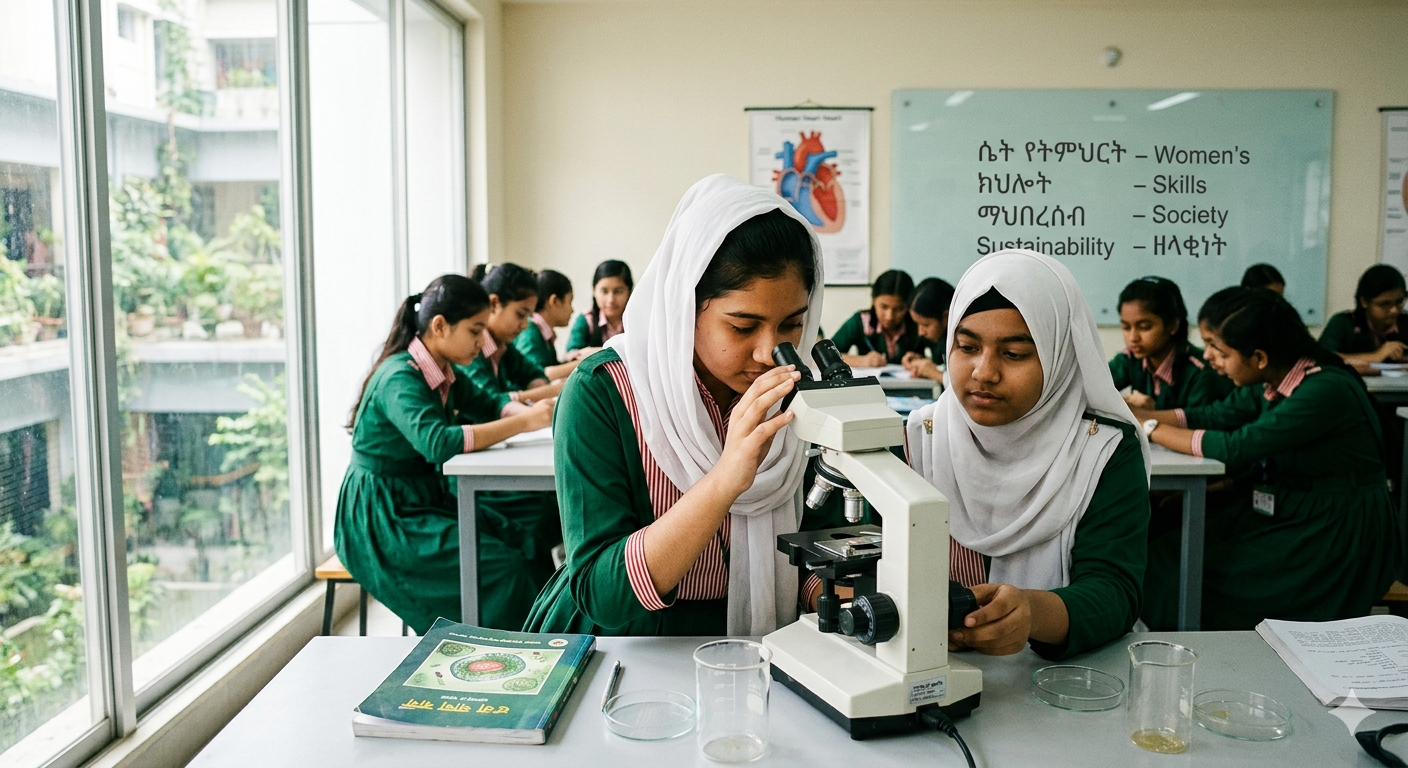
In the landscape of global development, few stories are as compelling as the transformation of Bangladesh. Once described as a “basket case,” the nation has emerged as a rising economic power in South Asia. Central to this journey has been the strategic prioritization of women’s education. For a country with high population density and limited natural resources, its greatest asset is its people—specifically, the 50% of the population that is female.
Women’s education in Bangladesh is no longer just a matter of social justice; it is the cornerstone of economic resilience, public health, and the ultimate roadmap for the country’s transition to a “Developed Nation.”
1. Breaking the Cycle of Poverty
Education is the most effective tool for poverty alleviation. When a girl in Bangladesh is educated, her earning potential increases exponentially. Currently, the Ready-Made Garment (RMG) sector, which accounts for the vast majority of Bangladesh’s export earnings, is powered largely by women. However, to move beyond low-wage labor and into high-value tech and service sectors, women need secondary and tertiary education.
- Financial Independence: Education allows women to enter the formal workforce, providing them with a steady income that offers a safety net against economic shocks.
- The Multiplier Effect: Research consistently shows that women reinvest up to 90% of their income back into their families (compared to 30-40% for men). This means an educated woman is more likely to fund her children’s schooling and healthcare, effectively breaking the intergenerational cycle of poverty.
2. Radical Improvements in Public Health
The “Bangladesh Paradox”—the phenomenon where the country achieved significant health gains despite low income—is largely attributed to maternal education.
Lower Maternal and Infant Mortality: Educated women are more likely to seek prenatal care, understand nutrition, and utilize modern medical facilities. This has led to a dramatic decline in maternal mortality rates over the last two decades.
Population Control: Education is the most effective “contraceptive.” Educated women generally marry later and have fewer, healthier children. Bangladesh’s success in reducing its fertility rate is a direct result of women gaining the agency to make decisions about their own bodies.
3. Ending the Scourge of Child Marriage
Bangladesh still faces one of the highest rates of child marriage in the world. Education serves as the primary defense against this practice.
Delayed Marriage: Every year a girl stays in secondary school significantly reduces the likelihood of her being married off before the age of 18.
Awareness of Rights: Education empowers girls to recognize their legal rights and gives them the confidence to resist social pressures that prioritize early marriage over personal development.
4. Economic Growth and LDC Graduation
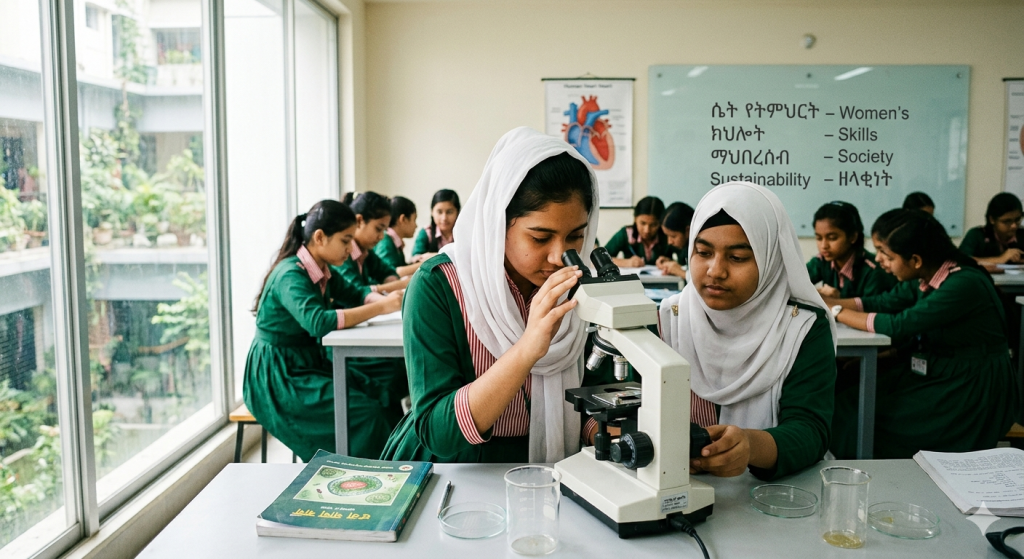
As of 2026, Bangladesh is at a critical juncture as it graduates from the Least Developed Country (LDC) status. To sustain this momentum, the government has recognized that gender parity in education is a “national development strategy.”
| Benefit Category | Impact of Women’s Education |
| GDP Growth | Increasing female labor participation could add billions to the national economy. |
| Agricultural Productivity | Educated female farmers adopt modern techniques and seeds more quickly. |
| Digital Inclusion | Bridging the digital divide requires a literate female population capable of using fintech and e-commerce. |
5. Resilience Against Climate Change
Bangladesh is one of the most climate-vulnerable countries on Earth. Women are often the most affected by natural disasters like floods and cyclones.
- Disaster Preparedness: Educated women are better able to access and interpret early warning signals and lead their families to safety.
- Sustainable Practices: Education fosters an understanding of environmental stewardship, allowing women to lead community-based adaptation and “green” initiatives in rural areas.
Conclusion: A Vision for the Future
The government’s recent pledge to provide free education for women up to the postgraduate level reflects a deep understanding that the future of Bangladesh is female. By investing in girls’ education, Bangladesh is not just helping individuals; it is building a more stable, prosperous, and equitable society.
For a nation that fought for its right to speak its own language and determine its own destiny, educating its women is the final, essential step in achieving true independence and global leadership.
“Gender equality is not a women’s issue. It is a national development strategy.” — World Vision Bangladesh, 2030
Share this content: