


In the quiet industrial belt of Bhaluka, Mymensingh, the hum of sewing machines is usually the only sound that fills the air. But on December 18, 2025, that hum was replaced by the terrifying roar of a mob.
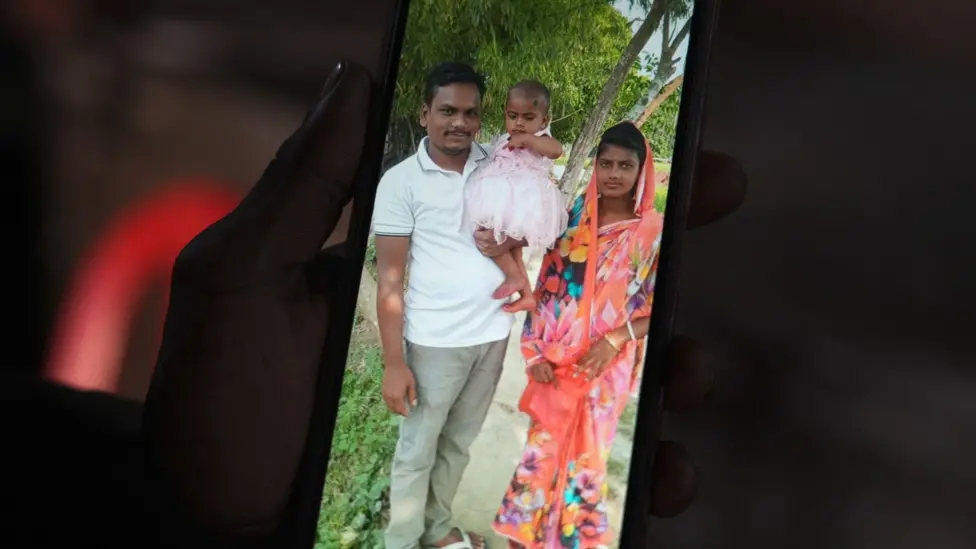
The victim was Dipu Chandra Das, a 27-year-old garment worker. He wasn’t a politician or an activist; he was a father, a husband, and a man trying to build a future for his three-year-old daughter. By the end of that day, he would become the face of a national tragedy—a victim of a lie that traveled faster than the truth could catch it.
A Murder Built on a Lie
The nightmare began with a whisper. An allegation was sparked within the Pioneer Knit Composite Factory that Dipu had made derogatory remarks about the Prophet Muhammad. In moments, the factory floor became a courthouse, and a group of coworkers became the jury and executioners.
The “mop justice” that followed was nothing short of medieval. Dipu was dragged from his workplace to the highway, beaten mercilessly, and eventually set on fire. The most harrowing part? It was all for nothing.
Subsequent investigations by the Rapid Action Battalion (RAB) confirmed the devastating truth: There was no evidence of any blasphemous remarks. The tragedy wasn’t a defense of faith; it was a catastrophic failure of humanity fueled by baseless rumors and, potentially, workplace jealousy.
The Global Echo
While the smoke has cleared in Bhaluka, the international community hasn’t looked away. By January 2026, the incident reached the floors of the UK Parliament. World leaders and human rights organizations are now asking the same question: How does a society protect its citizens when a rumor is enough to act as a death warrant?
This isn’t just about one man. It’s about a pattern of violence where religious sentiment is weaponized to settle personal scores. When we allow “mobs” to bypass the law, we don’t achieve justice—we achieve chaos.
Why Silence is Not an Option
We often think of “human rights” as abstract concepts discussed in air-conditioned rooms. But for Dipu’s widow and his young daughter, human rights were the difference between a father coming home for dinner and a family being destroyed.
To move forward, we must demand:
- Swift Prosecution: The 150 individuals involved must face the full weight of the law. Anything less is an invitation for the next mob to form.
- Accountability for Inciters: Those who spread the initial lie are just as guilty as those who held the matches.
- A Culture of Verification: We must stop being a society that reacts first and thinks later. In the age of social media, a “share” or a “shout” can be a weapon.
Final Thoughts
The story of Dipu Chandra Das is a stain on our collective conscience. It is a reminder that faith without compassion, and law without order, leads only to darkness.
We owe it to Dipu—and to the future of every minority and worker in Bangladesh—to ensure that his name is remembered not just for how he died, but for the change his death must inspire. Justice delayed is justice denied, but justice ignored is a civilization lost.
Share this content: