

The last decade in Bangladesh (2016–2026) has been marked by a series of communal incidents, often triggered by digital rumors, political transitions, or land disputes. While Bangladesh has a long-standing tradition of syncretism, the period has seen a rise in “mob justice” and targeted attacks on religious and ethnic minorities.
Below is an overview of the key incidents and the evolving nature of this violence over the past 10 years.
A Decade of Fragile Harmony: Attacks on Minorities in Bangladesh (2016–2026)
1. The Digital Spark: Nasirnagar and Beyond (2016)
In October 2016, a massive wave of violence broke out in Nasirnagar, Brahmanbaria. Over 100 Hindu homes and 15 temples were vandalized after a social media post allegedly showing an image of a Hindu deity over the Kaaba went viral. This incident set a dangerous precedent: a single Facebook post (often fake or doctored) could incite thousands to commit arson before authorities could intervene.
2. The 2021 Durga Puja Attacks
One of the most widespread communal escalations occurred in October 2021. Violence erupted in Cumilla after a video showed the Quran placed at the feet of a Hindu idol. The unrest spread to over 20 districts, resulting in:
- At least 7 deaths.
- Damage to over 80 temples and 200 mandapas.
- The deployment of paramilitary forces to restore order.
- Later investigations revealed the Quran was placed there by a provocateur to incite the mob.
3. Violence Against the Ahmadiyya Community (2023)
In March 2023, the Ahmadiyya community in Panchagarh was targeted during their annual convention (Jalsa Salana). Radical Islamist groups demanded the sect be declared “non-Muslim.” The ensuing riots led to:
- Two deaths and dozens of injuries.
- The burning of nearly 100 Ahmadi homes.
- The looting of several shops and community centers.
4. The 2024 Political Transition and Its Aftermath
Following the resignation and departure of Prime Minister Sheikh Hasina on August 5, 2024, a power vacuum led to widespread chaos. While the interim government labeled much of the violence “political,” human rights groups reported a communal dimension:
- BHBCUC Report: Documented over 2,000 incidents in the weeks following the ouster.
- Geographic Spread: Attacks were reported in 52 districts, targeting the homes and businesses of those perceived to be associated with the former ruling party, which included a disproportionate number of minorities.
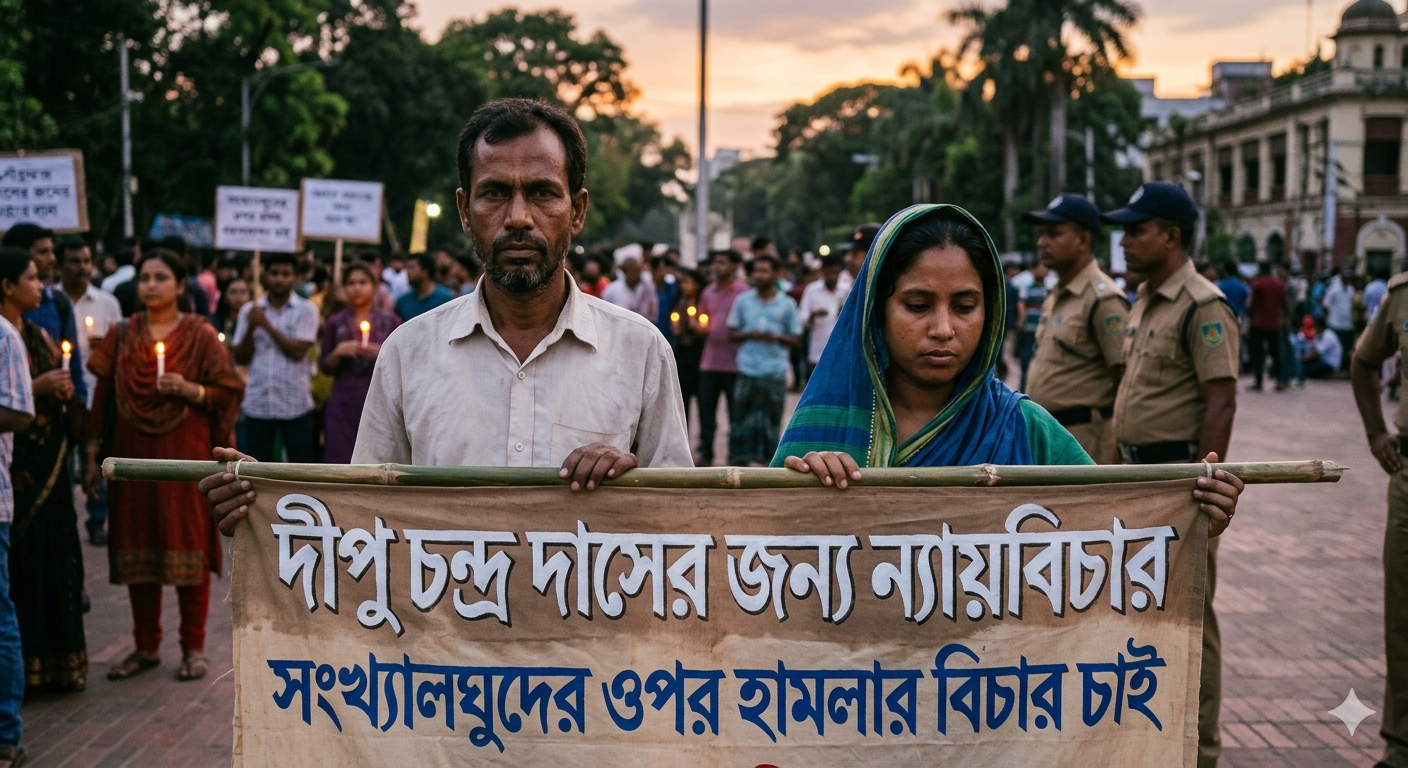
5. The “Election Wave” and Dipu Chandra Das (2025–2026)
The end of 2025 and the beginning of 2026 saw a renewed spike in targeted killings, often linked to the lead-up to the February 2026 elections.
- The Lynching of Dipu Chandra Das (Dec 2025): The horrific public murder of a garment worker in Mymensingh over false blasphemy claims.
- Spate of Killings: Between December 2025 and January 2026, at least 15 Hindu minorities were murdered. Victims included Samir Das (Feni), Sarat Mani Chakraborty (Narsingdi), and Rana Pratap Bairagi (Jashore).
Key Trends Over the Decade
| Motivating Factor | Impact & Methodology |
| Social Media Rumors | False blasphemy claims on Facebook are the #1 trigger for mass mobilization and arson. |
| Land Grabbing | Minorities in rural areas are often targeted under the guise of religion to force them to flee so their land can be seized. |
| Political Scapegoating | Minority communities are often viewed as a “vote bank” for specific parties, making them targets during shifts in power. |
| Intolerance Toward Sects | Increased pressure on the Ahmadiyya community and Sufi shrines, which extremists label as “un-Islamic.” |
Conclusion
The last ten years demonstrate that the vulnerability of minorities in Bangladesh is deeply tied to the stability of the state. When the rule of law weakens, minority communities are the first to feel the impact. International bodies, including the UN and the UK Parliament, have increasingly called for a permanent commission on minority rights and a dedicated law to protect against communal violence to break this decade-long cycle of impunity.