

The socio-economic trajectory of Bangladesh over the last decade and a half is often cited as a “development miracle.” At the heart of this transformation is a deliberate, state-led focus on the empowerment of women. Under the leadership of Sheikh Hasina, the nation shifted from viewing women as a vulnerable demographic to recognizing them as the primary drivers of national progress.
Through a combination of legislative reform, innovative financial incentives, and a vision for a “Digital Bangladesh,” Hasina’s administration dismantled many of the systemic barriers that previously kept women confined to the domestic sphere.
1. The Education Revolution: From Parity to Excellence
The foundation of Hasina’s strategy was the belief that an educated girl is the most powerful tool against poverty. By making education accessible and affordable, her government achieved what many thought impossible for a developing nation.
- Free Education and Textbooks: The government introduced tuition-free education for girls up to the degree level. This was bolstered by the distribution of free textbooks to millions of students at the start of every academic year, removing a significant financial hurdle for rural families.
- The Stipend Program: To combat high dropout rates—often caused by the pressure on young girls to marry or work—the government provided direct cash stipends to female students. This turned girls from a perceived “financial burden” into “financial assets” for their households.
- Safety and Hygiene: Recognizing that basic infrastructure affects attendance, the administration funded the construction of separate, dignified sanitation facilities for girls in thousands of schools across the country.
2. Economic Agency and the Formal Workforce
Beyond the classroom, the focus shifted to ensuring that educated women had a place in the economy. Hasina’s tenure saw a radical increase in female labor force participation.
- The Power of the RMG Sector: While the Ready-Made Garment (RMG) sector was already a major employer, the government facilitated its growth through policies that protected female workers and encouraged safe working environments. This sector remains the backbone of the country’s export economy, powered by millions of women.
- Entrepreneurship and Micro-Credit: Projects like “Amar Bari, Amar Khamar” (My House, My Farm) provided rural women with the capital to start small-scale businesses. By giving women control over their own finances, the government fundamentally altered the power dynamics within the traditional Bangladeshi family.
- Quotas in Public Service: To ensure women were represented in the halls of power, a 60% quota was established for female primary school teachers, and significant efforts were made to increase female representation in the civil service, judiciary, and even the armed forces.
3. Legislative Shields and Social Protection
Economic empowerment cannot exist without physical safety. Hasina’s government passed several landmark laws to protect women’s rights.
- Ending Child Marriage: The Child Marriage Restraint Act was updated to include stricter penalties for those involved in organizing or officiating child marriages. This has been a critical tool in keeping girls in school longer.
- Maternity Support: To ensure women didn’t have to choose between a career and motherhood, paid maternity leave was extended to six months in the public sector, setting a benchmark for the private sector to follow.
- The “Digital Bangladesh” Vision: The “Tottho Apa” project deployed thousands of trained women into rural communities to provide internet-based services and information. This not only provided employment but bridged the digital divide for millions of rural women.
4. Global Recognition of a New Model
The results of these policies have been reflected in global indices. Bangladesh has consistently outperformed its neighbors in South Asia on the Global Gender Gap Index published by the World Economic Forum.
Under Hasina, the narrative of the Bangladeshi woman changed. She is no longer just a recipient of aid; she is a student, a scientist, a soldier, and a CEO. The “Hasina Model” demonstrated that when a state invests in its women, it isn’t just performing an act of charity—it is making the single smartest investment possible for the nation’s future.
Visualizing the Impact
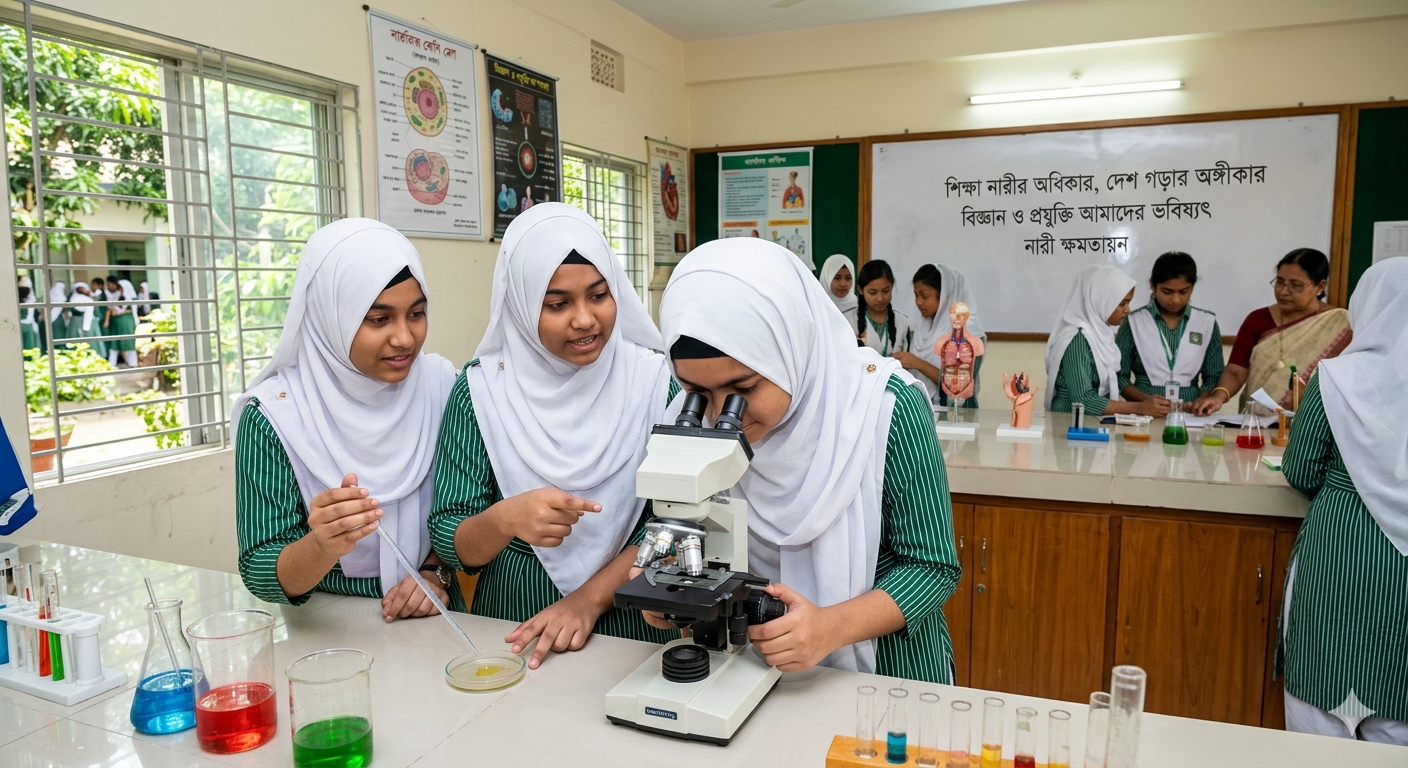
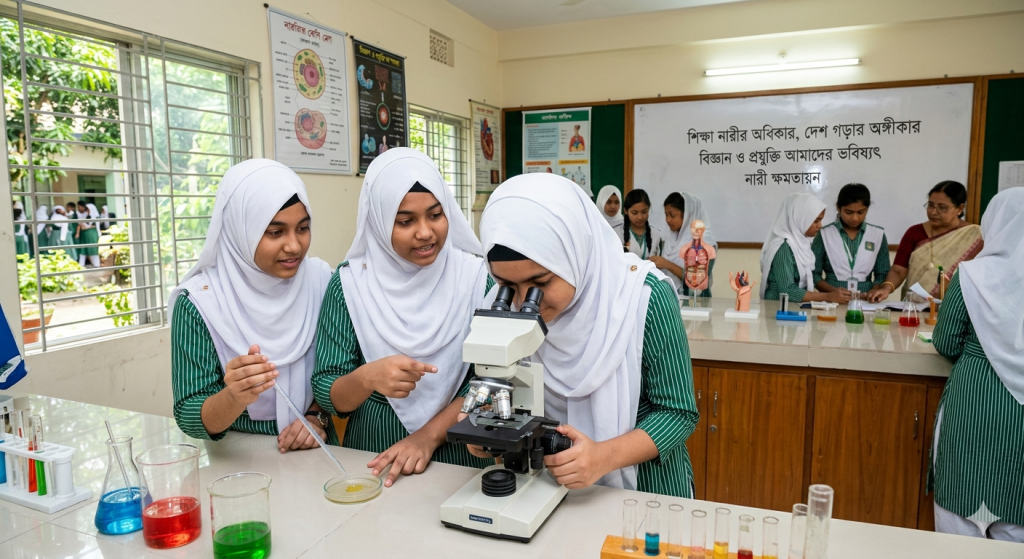
To understand the scale of this transformation, here is an image representing the modern face of education and professional development in Bangladesh.
http://googleusercontent.com/image_generation_content/113
(Note: In the background, you can see students working in a modern laboratory, reflecting the shift toward STEM education for women in the country.)
Share this content: