

Bridging the Gender Gap in Bangladesh 🇧🇩 | Why Equality Can’t Wait
In Bangladesh, the difference between men and women is not just about biology—it is deeply rooted in society, culture, and long-standing traditions. From a very young age, boys and girls are often raised with completely different expectations.
Boys are encouraged to be ambitious, independent, and career-focused. They are told to explore the world, take risks, and become leaders. Girls, on the other hand, are still too often guided toward being “responsible,” “obedient,” and family-oriented. Their dreams are sometimes shaped not by their own potential, but by social limitations placed around them.
Yes, Bangladesh has made real progress. More girls are going to school. More women are working than ever before. We have seen women step into leadership, business, education, and public service. But let’s be honest—this progress is uneven, and in many areas, it is still far from enough.
🔍 The Reality Many Women Still Face
Even today, millions of women across Bangladesh deal with barriers that men simply do not face in the same way:
▪️ Early marriage that cuts short education and independence
▪️ Limited access to higher education and professional training
▪️ Unsafe public spaces and transportation challenges
▪️ Workplace discrimination and unequal pay
▪️ Lack of leadership opportunities
▪️ Social pressure to prioritize family over career
▪️ Financial dependency due to limited access to income sources
▪️ A massive burden of unpaid household and caregiving work
And perhaps most importantly—many of these challenges are normalized. They are seen as “just the way things are.”
But they shouldn’t be.
⚖️ Why This Matters More Than Ever
Gender equality is not just a moral issue—it is an economic and national priority.
Think about it:
👉 When women work, household incomes increase
👉 When women earn, they invest more in children’s education and health
👉 When girls stay in school longer, early marriage rates drop
👉 When women lead, decision-making becomes more inclusive and balanced
A country simply cannot reach its full potential if half of its population is held back.
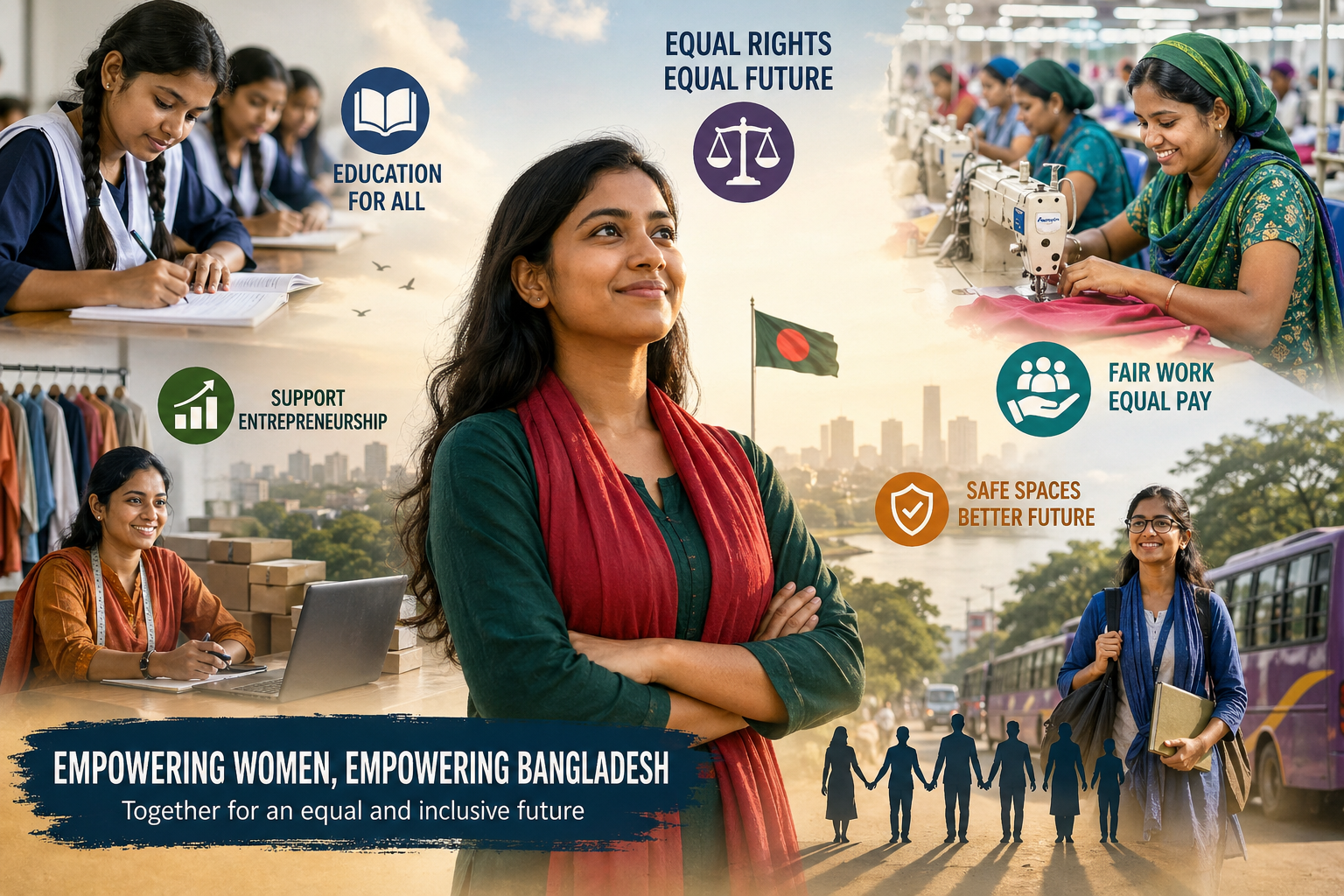
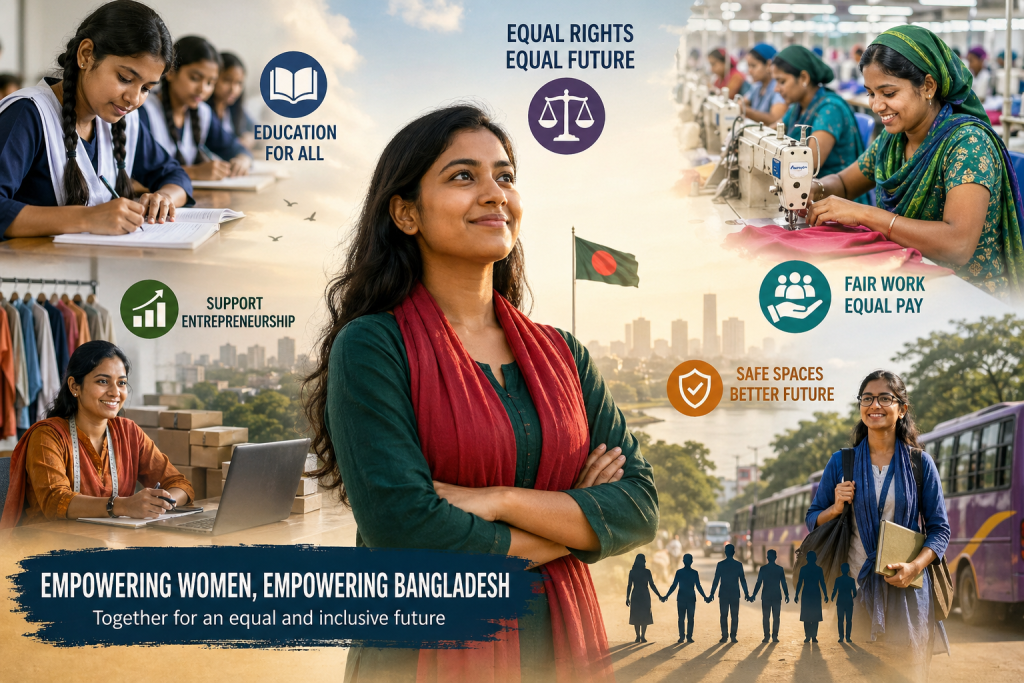
Bangladesh has already seen the power of women’s participation—especially in sectors like the garment industry, where millions of women have contributed to the country’s economic growth. But participation alone is not enough. Women deserve fair wages, respect, safety, and equal opportunities to grow.
🚧 What Is Holding Us Back?
The biggest barriers are not just economic—they are social and cultural:
- Deep-rooted gender stereotypes
- Lack of awareness about women’s rights
- Weak enforcement of laws protecting women
- Limited support systems for working mothers
- Social stigma around women working in certain fields
- Resistance to change within families and communities
Changing laws is important—but changing mindsets is even more critical.
🌱 What Needs to Change – Starting Now
If we truly want to reduce discrimination and involve more women in the economy, change must happen at every level:
🎓 Education First
Every girl deserves equal access to quality education. Not just primary school—but higher education, skills training, and career guidance.
💼 Economic Opportunities
Women need access to jobs across all sectors—not just a few “acceptable” ones. Equal pay for equal work must be a standard, not a debate.
🚀 Support Women Entrepreneurs
Women with ideas should have access to loans, training, mentorship, and digital platforms to grow their businesses.
🏠 Redefine Roles at Home
Household responsibilities should not fall only on women. Shared responsibility means women can pursue careers without being overburdened.
🛡️ Safety and Security
Safe transportation, secure workplaces, and strong action against harassment are essential for women to participate freely in society.
⚖️ Strong Implementation of Laws
We already have laws against child marriage, harassment, and discrimination—but enforcement must be consistent and effective.
🧠 Change the Mindset
This is the hardest but most important step. Families, schools, media, and communities must challenge outdated beliefs and support equality.
👥 Men Must Be Part of the Change
This is not a fight against men—it is a movement that requires men to stand beside women, not above them.
🌍 The Future We Should Aim For
Imagine a Bangladesh where:
✨ A girl’s dream is not limited by her gender
✨ Women feel safe walking, working, and leading
✨ Equal pay is normal—not exceptional
✨ Leadership includes both men and women equally
✨ Success is defined by ability—not gender
That future is possible—but only if we actively work toward it.
📢 Final Thought
Empowering women is not charity.
It is not a favor.
It is not optional.
It is necessary.
Because when women move forward, Bangladesh moves forward.
Let’s not wait for change—let’s be part of it.
Empowering women means empowering the nation.
#GenderEquality #WomenEmpowerment #Bangladesh #EqualRights #SocialJustice #EconomicGrowth #ChangeTheMindset
Share this content: